
The decade following Luther’s posting of the Ninety-Five Theses in 1517 left the Holy Roman Empire in a state of crisis. The Diet of Worms in 1521 had condemned Martin Luther and his theology. However, Emperor Charles V, who was perpetually distracted by wars against France in the west and the Ottoman Turks in the east, simply hadn’t the time to attend to German religious affairs. Into this vacuum stepped the imperial Diets—representative assemblies of princes, bishops, and free cities—and it was at the city of Speyer, in 1526 and again in 1529, that the Reformation’s political fate began to take shape.
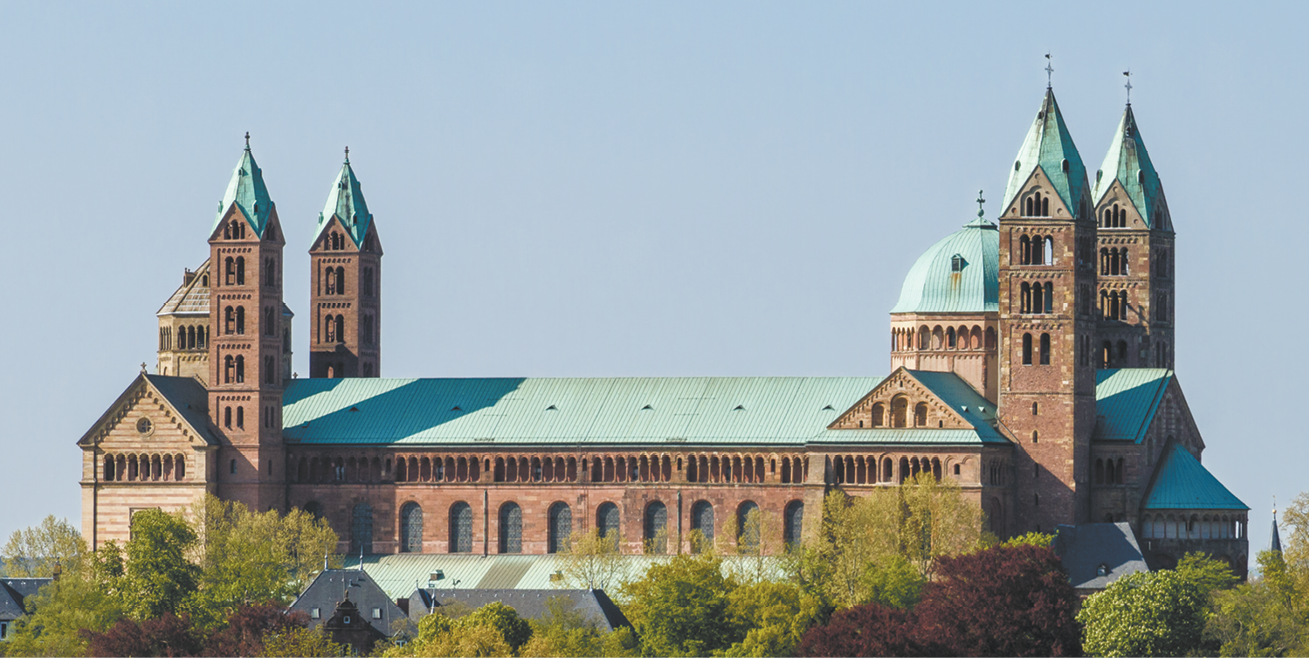
There were actually two Diets of Speyer. The first opened five hundred years ago this month, on June 25, 1526. It resulted in an unexpected gift to the Lutheran Reformers.
The Edict of Worms had proven impossible to enforce, so strong was the influence of the Reformation in Saxony and neighboring German principalities. The military, furthermore, desperately needed the cooperation of all the German princes—not just the Catholic ones—to confront the invading Ottoman Turks.
The Turks represented an existential threat to Christian Europe. That same summer they would crush Hungarian forces at Mohács, killing Hungarian King Louis II along with many of his nobles, and overrunning much of Hungary. As far as anyone knew, Germany would be next. A united Holy Roman Empire was desperately needed to confront this threat, and the assembled estates were willing to offer at least a temporary religious compromise in order to achieve that unity.
The First Diet of Speyer agreed to a remarkable provisional settlement: each prince would govern religious affairs within his own territory. The agreement, expressed in Latin, was cuius regio, eius religio; literally, “Whose realm, his religion.” It meant that the religion of the prince or elector who governed a region would determine the religion of all his subjects. If the prince were Catholic, the territory he ruled would be Catholic, and similarly for the Lutheran princes.
This new agreement, though still seen as provisional and temporary in 1526, was an important milestone for the Lutheran church. It represented the first practical legitimization of evangelical reform, and gave the Lutheran regions breathing room to consolidate their gains, organize church visitations, and begin institutionalizing the Reformation.
However, there were a multitude of trials yet in store for the fledgling Lutheran church. The Second Diet of Speyer, in 1529, would effectively erase the gains of the First. With the Turkish threat momentarily receding and Emperor Charles V’s position looking stronger, the Catholic majority at the Second Diet would vote to rescind the 1526 settlement and reimpose the Edict of Worms. Martin Luther would again be an outlaw, and the Lutheran theology once more officially condemned. Even this setback, however, would lead to a salutary outcome: on April 19, 1529, fourteen free cities and six Lutheran princes—including Elector John of Saxony and Landgrave Philip of Hesse—would formally protest the Diet’s decision. “In matters concerning God’s honor and the salvation of souls,” they declared, “each one must stand before God and give an account of himself.” This wasn’t just Lutheran self-interest; it was a confessional claim about the limits of human authority in divine things, grounded in the Reformers’ conviction that Scripture must be the final authority of all things to the church. Their written “Protestatio” gave a permanent name to the movement: Protestants.
What is the takeaway for us 21st-century Lutherans? Confessional faithfulness sometimes requires institutional courage. The church must be willing to take a stand against the majority whenever the Word of God is at stake. In the final analysis, the church is not answerable to human councils or synods, far less to the cultural trends currently in vogue in society, but to the Word of God alone. Speyer is a historical monument to the seriousness with which the Reformers took that conviction, and a reminder to us to take it no less seriously today.

is a professor at Immanuel Lutheran College in Eau Claire, Wisconsin, and editor of the Lutheran Spokesman.