“THEY DID NOT FAIL”
Picture this midwinter Friday night scene: The house—quiet. The fireplace—lit. The workweek—done and dismissed. You've settled in with the book you've been longing to start, and the title of the book is . . . the Book of Concord. No? Well, that's understandable, because the Book of Concord was never meant to be a recreational read.
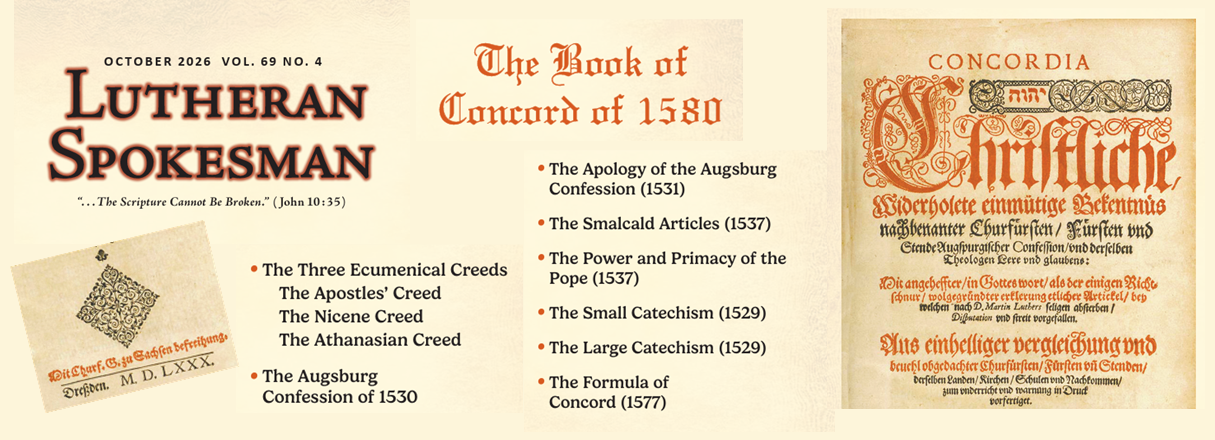
After the death of Martin Luther in 1546, attacks by false teachers from without and controversies from within tore at the newly-formed Lutheran church. Turmoil raged in Europe because of this, and rulers wanted peace restored. At their behest, the Book of Concord was compiled as a means to accomplish doctrinal unity—hence the name concord, which means peace, harmony, and agreement.
Between 1577 and 1580, Jakob Andreae and Martin Chemnitz spearheaded the effort to select writings that would clarify scriptural and doctrinal topics. The resulting table of contents is shown below:
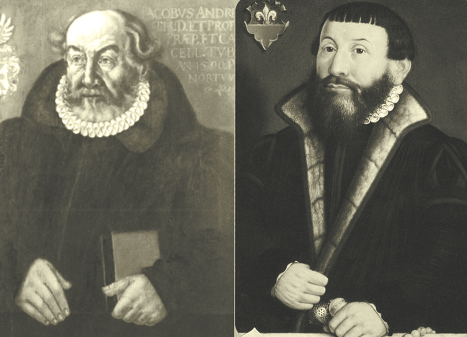
Jakob Andreae and Martin Chemnitz
- The Ecumenical Creeds of Christian Faith (Apostles', Nicene, and Athanasian)
- The Augsburg Confession of 1530
- The Apology of the Augsburg Confession
- The Smalcald Articles of Martin Luther
- Treatise on the Power and Primacy of the Pope
- The Small Catechism of Martin Luther
- The Large Catechism of Martin Luther
- The Formula of Concord
These entries give the book a textbook feel and, in fact, it is used in seminary classes. Could a textbook ever make your reading list? Maybe?
Confessional Lutherans believe that the Bible is the inerrant Word of God and also adhere to and confess the statements of faith found in the Book of Concord. Additionally, on the Church of the Lutheran Confession website, the history section explains, "Members of the CLC are eager to testify to the truths that had been held by the Synodical Conference when it had been faithful to the doctrines of Scripture and the Lutheran Confessions, as found in the Book of Concord 1580."
Picture that midwinter Friday night scene again, but this time you actually are holding the Book of Concord. Ask the Helper, the Holy Spirit, to guide you as you explore and digest the contents of this valuable book, in order to learn more about what to adhere to, confess, and be eager to testify to.
Unsurprisingly, while we value it, false teachers devalue it. One website dedicated to the Book of Concord states the following:
"Do all Lutheran churches have the same view of the Book of Concord? No." (https://thebookofconcord.org/introductory-materials/book-of-concord-faq/ Used by permission)
Many Lutheran churches in the world today have been thoroughly influenced by the liberal theology that has taken over most
so-called "mainline" Protestant denominations in North America and the large Protestant state churches in Europe and elsewhere.
The foundation of much of modern theology is the view that the words of the Bible are not actually God's words, but merely human opinions and reflections of the personal feelings of those who wrote the words. [Note: this view blatantly contradicts God's Word. 2 Peter 1:20-21 says, "No prophecy of Scripture comes from someone's own interpretation. For no prophecy was ever produced by the will of man, but men spoke from God as they were carried along by the Holy Spirit."]
Consequently, confessions that claim to be true explanations of God's Word are now regarded more as historically conditioned human opinions, rather than as objective statements of truth. [emphasis added] (same citation as used above)
The Book of Concord isn't inspired, but it is a true and accurate summary of the teachings of the Bible itself. Charles Porterfield Krauth put it this way: "We do not claim that our Confessors were infallible. We do not say they could not fail. We only claim that they did not fail."
The Book of Concord is a consequential book. It will instruct you in sound doctrine, increase your knowledge, strengthen your faith, and help you witness—"always being prepared to make a defense to anyone who asks you for a reason for the hope that is in you."
(1 Peter 3:15)
"But grow in the grace and knowledge of our Lord and Savior Jesus Christ. To Him be the glory both now and to the day of eternity. Amen." (2 Peter 3:18)
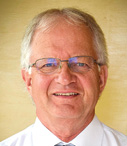
is a retired teacher. He lives in Eau Claire, Wisconsin.