Skip to content

Peace Thru Christ Lutheran Church Middleton, Wisconsin

  • by

What’s New With YOU? Updates from congregations around the church of the Lutheran Confession Since our article appeared in the Lutheran Spokesman under the heading “A Slice of Life in the CLC” (November 2015), quite… 

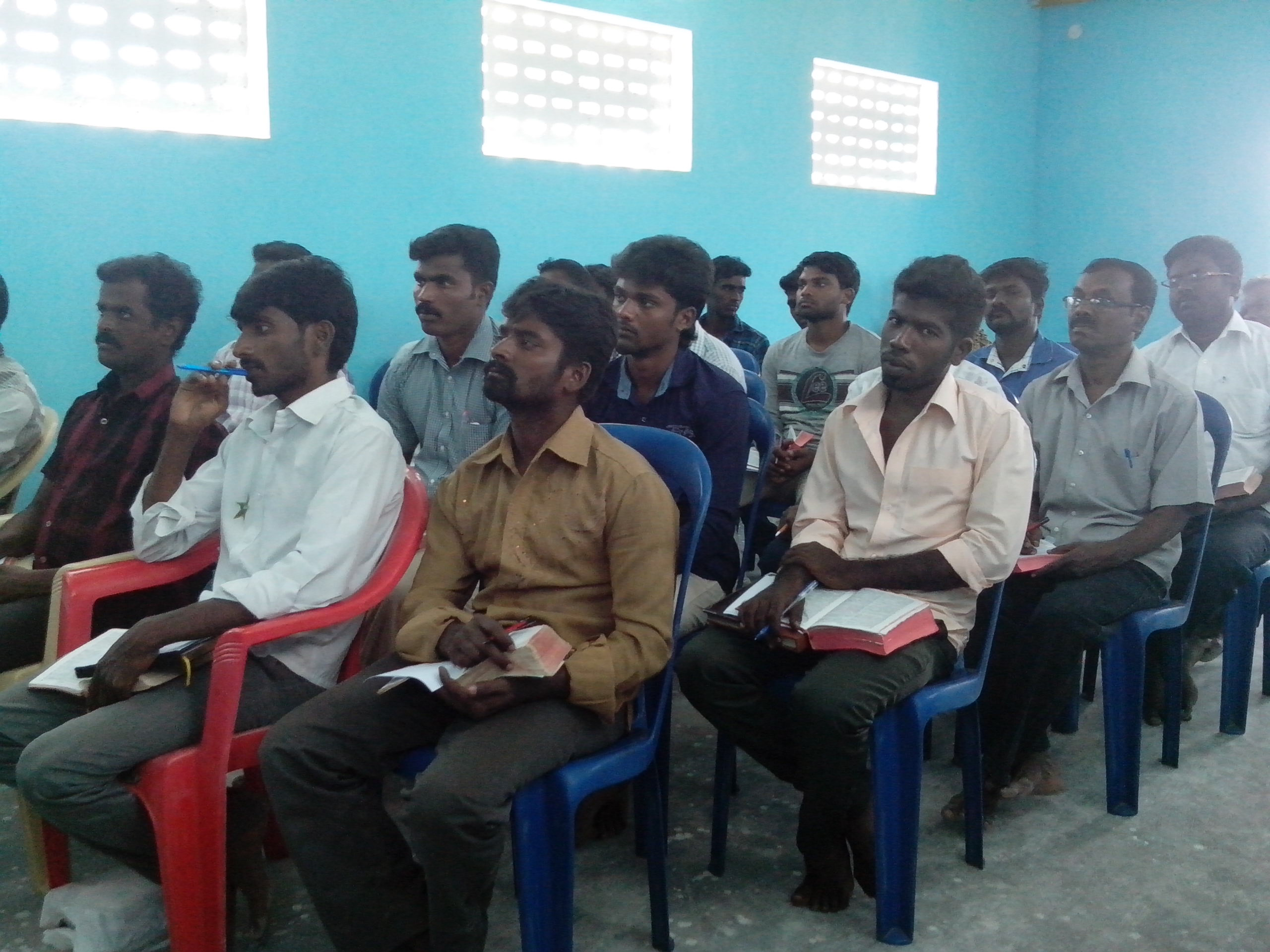
Persecution of the Truth in India

  • by

NOTES FROM THE FIELD In this series, thoseinvolved with CLC foreign missions profile one aspect of our overseas endeavors. If there was ever a place where Paul’s words apply—“exchanging the glory of the immortal God… 

Serving our Ever-Expanding Overseas Mission Fields

  • by

MISSION NEWSLETTER Every other month our CLC Board of Missions updates us with recent news from various mission fields. We are continually overwhelmed by how our gracious God has blessed the CLC with an ever-expanding… 

“BREAD OF LIFE” READINGS JULY 2021 

  • by

TLH = The Lutheran Hymnal, 1941; WS = Worship Supplement 2000; LSB = Lutheran Service Book, 2006

Date Hymns Reading Comments

Jul 1 WS 744 (LSB 801) Genesis 1:1-31 Everything God made was very good. His original created worked—and worked perfectly.

Jul 2 TLH 282 Genesis 2:1-25 God also made Adam and Eve, the “crown” of His creation, and they too were
perfect and perfectly suited to one another.

Jul 3 TLH 369; LSB 561 Genesis 3:1-24 One sin ruined everything because only one thing wrong ruins perfection. But one Man’s
perfection would later crush Satan’s head.

Jul 5 TLH 46 (LSB 921) Philippians 1:1-11 Paul prays with confidence in the Lord’s continued work among the Philippians.

Workers in the Word, Called by God

  • by

COVER STORY – THE DIVINE CALL

Carrying out the Lord’s kingdom work under a divine call is a truly awesome privilege. It is, at the same time, both enormously gratifying and profoundly sobering to recognize that God Himself has elected you to the office you hold. The Holy Spirit through Paul communicated the weight and origin of the divine call with these words: “Pay careful attention to yourselves and to all the flock, in which the Holy Spirit has made you overseers, to care for the church of God, which he obtained with his own blood.” (Acts 20:28 ESV) He taught the gravity of the divine call by reminding us that the work is all about caring for souls that “he obtained with his own blood”—human beings for whom our Savior suffered and died. He also assured us that the origin of the divine call is God Himself .

The context of these words is also informative. They were spoken to the elders of the church at Ephesus. From Miletus, on the return leg of his third missionary journey, Paul had asked the elders from Ephesus to come to him. We therefore conclude from these words (“in which the Holy Spirit has made you overseers”) that every divine call has the same source or origin—God the Holy Spirit—and that every single individual laboring under a divine call is charged by God Himself with the care of His own beloved children. Every Christian called to provide any aspect of soul-care to others is included. Divine calls are not limited therefore to the obvious (pastors, teachers, and missionaries), but include also every Sunday school teacher, every church council member, every elder and deacon, every layman that the congregation calls to conduct a Sunday service in the Pastor’s absence or to assist with the distribution of the elements in Holy Communion.

Building the Body of Christ

  • by

DEVOTION—THE PUBLIC MINISTRY

In the late 1980’s and early 1990’s, “Hans and Franz” wanted to “pump you up!” Two comedians were mimicking body builder and actor Arnold Schwarzenegger. Wearing stuffed sweatsuits, weightlifting belts and gloves, Hans and Franz complained about “flabby arms” and weak bodies. In their comedy routine, they talked about wanting to “pump you up” by lifting weights.

While their comedy sketch was funny, truly weak bodies are no joke. Ask anyone who has weak or atrophied muscles how hard it can be to carry out the simplest of everyday tasks. To “pump up” our weak muscles, we often make use of “PT”—physical therapy—to strengthen our bodies.

TLH Hymn 485 “Lord Jesus, Who Art Come”

  • by

A HYMN OF GLORY LET US SING

Bernard of Clairvaux, whom Luther once called “the most pious monk that ever lived,” said that the office of the public ministry is “Sacerdotium non est otium, sed negotiorum negotium.” Fortunately for me, the source where I came across that quote also contained the translation. The first part of it means “The office of the ministry is not leisure,” and the second part can be translated either as “but work above all work” or as “but difficulty on top of difficulty.” For those who are faithful in that office, that observation is certainly true.

Your Word Has Given Me Life

  • by

GEMS FROM THE OLD TESTAMENT 2 Kings chapter 25 tells of how Nebuchadnezzar and his army laid siege to Jerusalem. The situation became so desperate that King Zedekiah fled from the city. “But the army of… 

Best Friends Forever

  • by

STUDIES IN THE NEW TESTAMENT “Adulterers and adulteresses! Do you not know that friendship with the world is enmity with God? Whoever therefore wants to be a friend of the world makes himself an enemy… 

Law First, Then Gospel

  • by

WALTHER’S LAW AND GOSPEL One of the hallmarks of the Lutheran Church is its proper understanding and application of the Bible’s two main teachings—Law and Gospel. Dr. C.F.W. Walther’s seminal work, The Proper Distinction Between…