Skip to content

They Did Not Enter In

They Did Not Enter In

  • by

Written by: Jay Hartmann pastor of Faith Lutheran Church in Coloma, Michigan.

“For who, having heard, rebelled? Indeed, was it not all who came out of Egypt, led by Moses? Now with whom was He angry forty years? Was it not with those who sinned, whose corpses fell in the wilderness? And to whom did He swear that they would not enter His rest, but to those who did not obey? So we see that they could not enter in because of unbelief” (Hebrews 3:16-19).

Why Would a Pastor Refuse to Bury Someone

  • by

Written by: Frank Gantt pastor of St. Luke’s Ev. Lutheran Church in Lemmon, South Dakota. “Since it has pleased Almighty God in His good providence to call this brother out of this present life, it is proper… 

You Are Not Alone

  • by

“Now Jacob went out from Beersheba and went toward Haran. So he came to a certain place and stayed there all night, because the sun had set. And he took one of the stones of… 

Abraham Calov

  • by

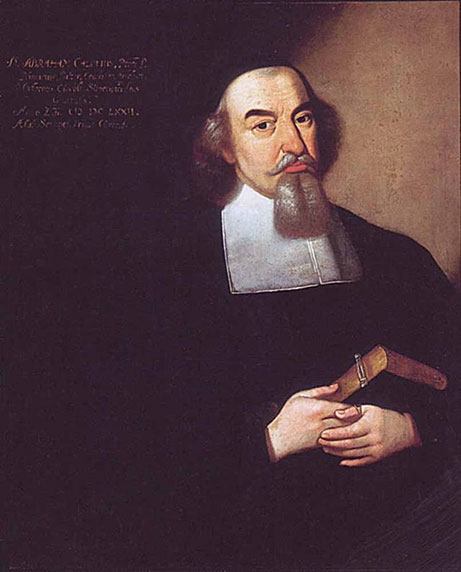
Written by: James Naumann pastor of Our Savior’s Ev. Lutheran Church in Jamestown, North Dakota. Introduction Abraham Calov was born in 1612 at Mohrungen, a small town in the Duchy of Prussia. Today this town is… 

Lusaka, Zambia

  • by

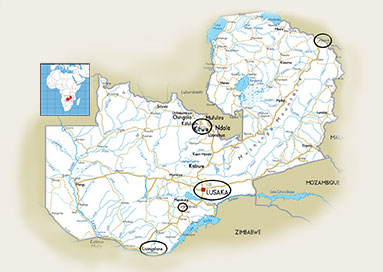
NOTES FROM THE FIELD (THIRD IN A SERIES) In this series, those involved with CLC foreign missions profile one area of our overseas endeavors. Written by: Pastor Todd Ohlmann of Faith Lutheran Church in Manchester,… 

Morning Star Lutheran Church—Fairchild, Wisconsin

  • by

Fairchild lies thirty miles southeast of Eau Claire at the junction of Highways 12 and 10 among the woods, hills, and farmland of northwestern Wisconsin. Fairchild was founded in the 1870’s and became a thriving… 

The Transfiguration of Jesus Is Your Glory!

  • by

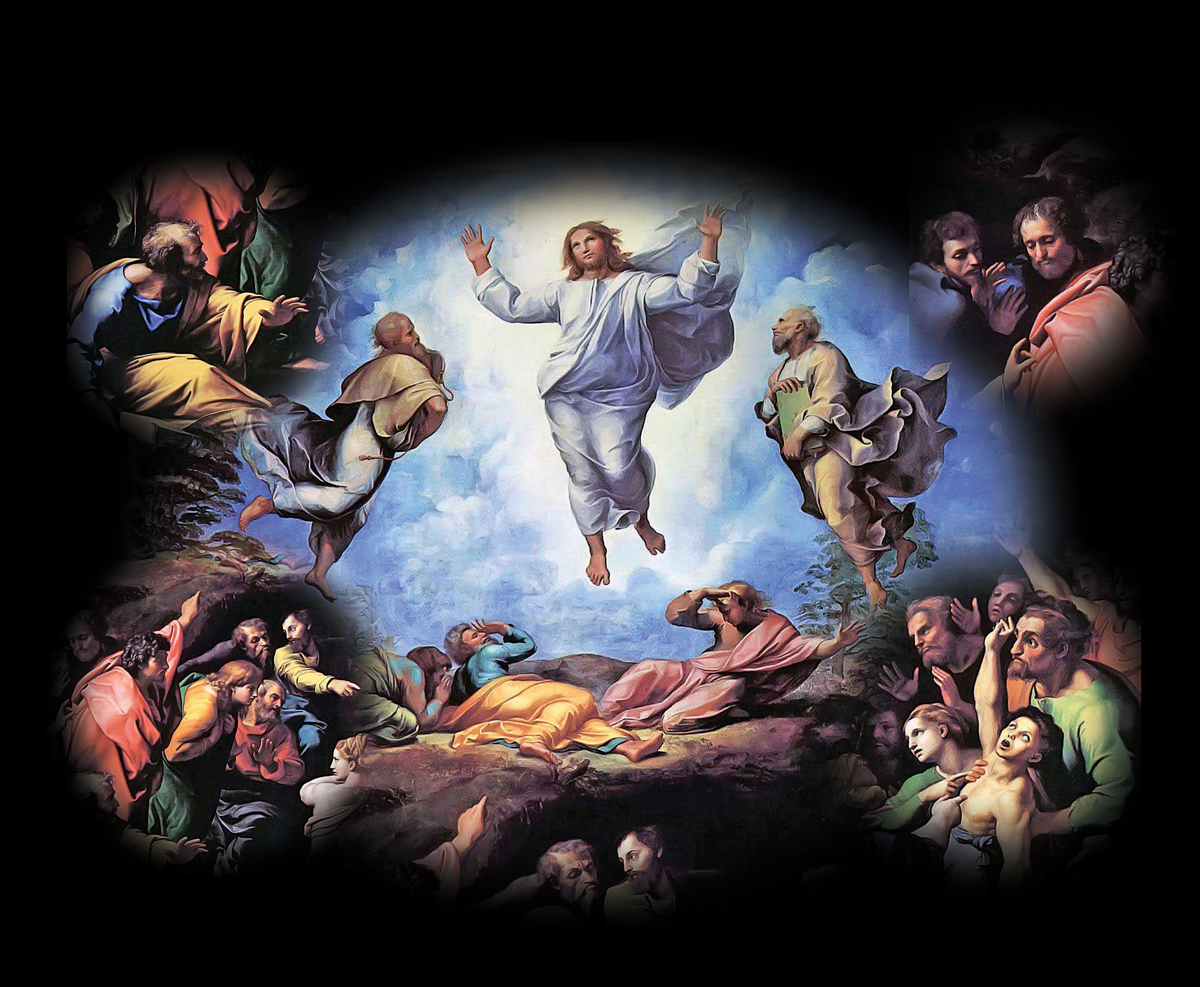
The Transfiguration: 

The last painting by the Italian High Renaissance master Raphael. Commissioned by Cardinal Giulio de Medici (the later Pope Clement VII [1523-1534]) and conceived as an altarpiece for the Narbonne Cathedral in France, Raphael worked on it until his death in 1520.

He was transfigured before them. His face shone like the sun, and His clothes became as white as the light” (Matthew 17:2).

Suddenly Jesus was dazzling—His face, His clothes! Then, He was speaking with Moses and Elijah, prophets of long ago! Astounding! Why was this happening?

I. Was it for Jesus’ benefit? Yes. Did not angels minister to Him after Satan tempted Him? Did not an angel strengthen Him in the Garden of Gethsemane while He earnestly prayed to His Father? Surely it was for Jesus’ benefit that Moses and Elijah came to speak with Him about His “decease,” His departure, His end. Moses and Elijah had labored among God’s people many years earlier to point them to God’s merciful and gracious atonement through the Messiah to come. Salvation through Christ was their “work.”

II. Was the transfiguration of Jesus for the benefit of the disciples (Peter, James, and John) who were with Him? Yes. They had heard Jesus speak wonderful words of forgiveness and compassion. They had seen Him work miracles of love and of might. They had heard Him soundly refute the Pharisees. Jesus was their Messiah, the “Christ,” the “Anointed One!”

B R E A T H O F G O D

  • by

If God truly gave us His Word
in written form, as He has in
the Bible, then what do
we have with which
to compare it? 

In a certain sense, we have all been inspired at one time or another. A moving poem, the birth of a child, a once-in-a-lifetime beautiful sunset, or a heartfelt sermon could all serve to inspire us. This is generally the world’s view of inspiration. Inspiration is viewed as merely a strong feeling or emotional tug, an intellectual movement to action—whether through song, painting, writing, or activism.
This is why it is so essential that we remember to define the doctrine of verbal inspiration as being of divine origin rather than being a product of the emotions or minds of men. Our Bible

“God Is Able—He Always Lives!”

  • by

“O all-embracing Mercy,
O ever-open Door,

What should we do without Thee
When heart and eye run o’er?

When all things seem against us,
To drive us to despair,

We know one gate is open,
One ear will hear our prayer.”
 

TLH 279:4

“Therefore He is also able to save to the uttermost those who come to God through Him, since He always lives to make intercession for them” (Hebrews 7:25).

There is a commercial that has made the rounds over the last months on both local TV and radio. It begins with a computer voice answering a phone call, and continues with the caller giving the reason for his call, which is usually a request for some kind of help. The computer then “talks” to another computer, wondering what to do, because it is completely unable to give the required help. The caller is then forwarded “for an answer” to a pay phone somewhere that no one ever answers, or he is left with the dial-up modem noise. The commercial is then resolved by the sponsor touting itself as the place to which you can successfully go to get actual help.

A Roller Coaster in the Wilderness

  • by

…the same potential for disaster that faced the Israelites in the wilderness also faces us today.

Therefore, as the Holy Spirit says: “Today, if you will hear His voice, Do not harden your hearts as in the rebellion, In the day of trial in the wilderness, Where your fathers tested Me, tried Me, And saw My works forty years. Therefore I was angry with that generation, And said, ‘They always go astray in their heart, And they have not known My ways.’ So I swore in My wrath, ‘They shall not enter My rest.’” Beware, brethren, lest there be in any of you an evil heart of unbelief in departing from the living God; but exhort one another daily, while it is called “Today,” lest any of you be hardened through the deceitfulness of sin. For we have become partakers of Christ if we hold the beginning of our confidence steadfast to the end, while it is said: “Today, if you will hear His voice, Do not harden your hearts as in the rebellion” (Hebrews 3:7-15).