Skip to content

The Celebration of God’s One-Way Path

  • by

COVER STORY – EPIPHANY

If we could travel back in time, one of the many things that would no doubt surprise us would be the changes that have occurred in ecclesiastical emphasis. Virtually all Christians today would, for example, list Christmas, Good Friday, and Easter as our greatest Christian celebrations. Yet church historians tell us that many Christians in prior centuries regarded Epiphany as the preeminent Christian event. The change is difficult for modern Christians to grasp, especially given the fact that Epiphany receives so little emphasis or notoriety today. What caused such a dramatic shift in emphasis? In two words, ignorance and entitlement.

Christians today have no trouble identifying the basis for our modern celebrations of Christmas, Good Friday, and Easter: Jesus was born, Jesus died, and Jesus rose from the dead. Not so with Epiphany. While many could explain that the word epiphany means “manifestation” or “appearance”—and might even be able to associate Epiphany with the arrival of the Magi, the baptism of Jesus, and Jesus’ first miracle at the wedding feast in Cana—few could articulate the importance of those events. In the minds of most Christians today, Epiphany is encapsulated in Christmas. Jesus manifested Himself on earth at His birth. It seems illogical to us that God would send His Son into our world, but then withhold the revelation of that Son. The three events that are routinely commemorated in connection with the Epiphany simply tell us how God revealed His Son also to the Gentiles (the star that drew the Magi), how the Father announced to the Jews that Jesus was His Son (His Baptism), and the revelation of the miraculous powers that verified Jesus’ deity (changing water to wine in Cana). Given all of that, Christians today still find it difficult to grasp the significance that prior generations recognized in Epiphany.The Celebration of God’s One-Way Path

God and Sinners Reconciled!

  • by

Are there any more amazing words than that? We sing these words of Hark, the Herald Angels Sing (TLH 94) every year. Those words might roll off our tongues with hardly a thought. In fact, many secular choirs sing this famous hymn of Charles Wesley at this time of year without even pausing to wonder what “God and sinners reconciled!” actually means.

Could there be two more polar opposites than the holy God and wretched sinners? Could there be any more irreconcilable differences? It would be an astonishing thing that would grab the attention of the whole world if North and South Korea could be reconciled and find peace with each other. It would make your jaw drop in amazement if a serial killer would become best friends with the families of his victims.

Could irreverent rebellious creatures, who mock and blaspheme the God Who created them and revel in everything God forbids, be reconciled to the God Whom they despise? Should God, Who cannot tolerate sin and Who must punish every sin—yes, the God Who destroyed the entire world in a flood because of the wickedness of mankind—be reconciled to the sinners who hated Him and even crucified His own Son? That would the news of all the ages.God and Sinners Reconciled!

Don’t Forget to Give Thanks

  • by

COVER STORY – THANKSGIVING

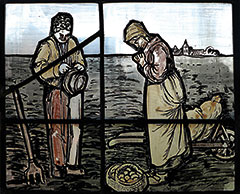
“Oh, that men would give thanks to the LORD for His goodness, and for His wonderful works to the children of men! Let them sacrifice the sacrifices of thanksgiving, and declare His works with rejoicing.” (Psalm 107:21-22)

“Oh, give thanks to the Lord, for He is good! For His mercy endures forever.” 

This prayer, drawn from the Psalms, has been a favorite of many a Christian down through the years. As believers have called to mind the Lord’s generosity in providing so many good things to eat and drink, they have united their hearts with the psalmist’s in exclaiming: “Thank You, Lord!” At this time of year we’re especially mindful of the Lord’s mercy. How lavishly our Thanksgiving tables are spread with a veritable smorgasbord of delicacies from His gracious hand! “Turkey and all the fixings,” as they say.

As children of God we know that we have reason to thank our heavenly Father for His cornucopia of blessings not just on a single day towards the end of November, but each day of our lives. In the verse quoted above from Psalm 107 we’re encouraged to do just that. Four times the psalmist’s call rings out: “Oh, that men would give thanks to the LORD for His goodness, and for His wonderful works to the children of men!” (verses 8,15,21,31) We might wonder why he made a point of repeating this thought. He did so undoubtedly for emphasis, because he knew God’s children need this reminder again and again. Aren’t we inclined to take God’s blessings for granted? Isn’t the temptation strong (especially for those living in an affluent culture) to forget that “every good gift and every perfect gift is from above, and comes down from the Father of lights” (James 1:17) and to begin thinking that the material benefits we enjoy are the product of our own doings and labor? (see Deuteronomy 8:11-17) The result of such misguided thinking is that we may neglect to lift our hearts in praise to the One from whom our blessings flow.Don’t Forget to Give Thanks

Palm Prints

  • by

GEMS FROM THE OLD TESTAMENT “Can a woman forget her nursing child, and not have compassion on the son of her womb? Surely they may forget, yet I will not forget you. See, I have… Palm Prints

Bringing the Little Children

  • by

NOTES FROM THE FIELD In this series, those involved with CLC foreign missions profile one aspect of our overseas endeavors. Jesus said, “Let the little children come to me and do not hinder them, for… Bringing the Little Children