

“Christ the Lord is Risen Again”
Each month we highlight a hymnwriter who authored one or more of the well-loved hymns that we sing today.
For many reasons, the term Reformation is often synonymous with the name of Martin Luther. The Lutheran Reformation impacted both the sacred and the secular worlds. The Reformation had far-reaching effects on theology and worship, as well as culture and even language. But Luther was not alone in the Reformation movement. John Wycliffe and John Hus preceded Luther, and Chemnitz and Walther would follow him. There were also those who were contemporaries of Luther in these labors. One such man was Michael Weisse, who was born three years before Luther in what is today Poland.
Like Luther, Weisse’s concern for the truth of God’s Word led him out of the Roman Catholic Church. Weisse became associated with the Bohemian Brethren, a reformation movement which had its roots with John Hus in Bohemia. In 1522, Weisse was part of a delegation which was sent by the Brethren to Wittenberg, to compare their teaching with that of Luther’s. Though the Brethren were more doctrinally aligned with Ulrich Zwingli than they were with Luther, they still shared much in common with Luther.
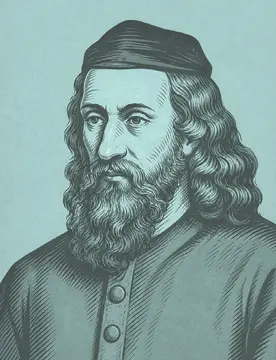
Michael Weisse
One of those areas of commonality was in worship. Like Luther, who published the first Lutheran hymnal in 1524 with only eight hymns, Weisse also worked to publish a hymnal. In 1531 Weisse published the first Brethren hymnal, which contained over 150 hymns. It was the largest Protestant hymnal up to that point. It was also the first hymnal to organize hymns by topic, an organizational style that is used still today.
Weisse either wrote or adapted almost all the hymns in that hymnal, but possibly his most enduring hymn is the Easter hymn “Christ the Lord Is Risen Again” (TLH 190; OSOC 360), which featured an ancient Latin melody and was based on the twelfth century German hymn Christ ist erstanden.
This hymn is unique in several ways. First, it is one of the few hymns to directly mention Christ’s descent into hell. Christ’s descent into hell is often misunderstood as part of the Savior’s suffering. But the Scriptures teach that His descent into hell was a declaration of the victory that Jesus had won through His perfect life and sacrificial death. Weisse’s hymn makes this clear:
He whose path no records tell
hath descended into hell;
He the strong man armed hath bound
and in highest heav'n is crowned. Hallelujah! (verse 4)
Another unique feature of Weisse’s Easter hymn is the emphasis on the Christian’s role as a witness of the risen Savior. While Easter hymns often point to the joy, hope, and peace that Christ’s resurrection offers sinners, few recall the Savior’s commission to His people to serve as witnesses of His resurrection. Weisse’s sixth verse is reminiscent of Jesus’ words: “Thus it is written, and thus it was necessary for the Christ to suffer and to rise from the dead the third day, and that repentance and remission of sins should be preached in His name to all nations, beginning at Jerusalem. And you are witnesses of these things. Behold, I send the Promise of My Father upon you; but tarry in the city of Jerusalem until you are endued with power from on high.” (Luke 24:46-49 NKJV) We sing:
Now He bids us tell abroad
How the lost may be restored,
How the penitent forgiven,
How we, too, may enter heaven. Hallelujah!
Like the Reformers of old, we are heirs of Christ’s victory over death and Satan and are witnesses of that victory to the world in which we live. The first disciples, and the Reformers who followed them, gave their lives as witnesses of the risen Christ. The truth of Jesus impacts us and our world still today. Rejoice in and proclaim that truth!

is a pastor at Immanuel Lutheran Church in Mankato, Minnesota.