On May 13, A.D. 609, Pope Boniface IV dedicated a new basilica, formerly the Roman Pantheon, to “the Virgin Mary and all the martyrs.” Reportedly, twenty-eight cartloads of martyrs’ bones had been hauled from the catacombs and placed under the altar of the new church. These actions “broke ground for recognizing the saints’ contributions to the faith on a broader scale.” (catholicsaints.day) This dedication day became known as the Feast of All Holy Martyrs. During the following century, the feast day was expanded to honor all saints, renamed All Saints Day, and moved to November 1.
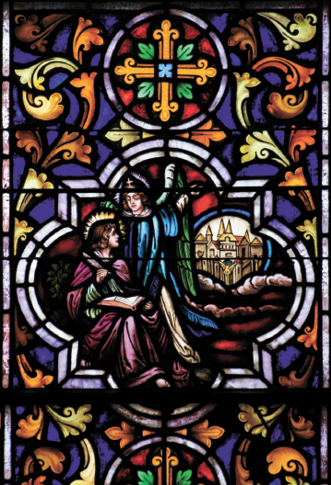
The main purpose of All Saints’ Day in the Roman Catholic Church is “to honor all of the saints, known and unknown” (Catholic News World), and to recognize their “contributions to the faith,” which come from their “role as intercessors and models of Christian virtue.”
In His saints, God has provided us with models for our lives. We thank God for this blessing, and as a reminder of these patterns to live by, thirteen of our stateside CLC congregations have chosen to be identified by a saint’s name–an apostle in most cases. There are two St. John’s, one each named after Luke, Matthew, Peter, and Stephen, while seven congregations are named after Paul. Certainly, these men were sinners, as are all people while living on earth, but they clung to our Savior’s offer of forgiveness and His promise of salvation. They fought the good fight, ran the race, and kept the faith; many of them were put to death for their devotion to Jesus—truly exemplary. The Apostle Paul wrote, “Join with others in following my example, brothers and sisters, and just as you have us as a model, keep your eyes on those who live as we do.” (Philippians 3:17 NIV84)
But the other role cited by the Catholic Church—the one of saints being intercessors in heaven for people still on earth—is not supported by the Bible. We read in 1 Timothy 2:5, “For there is one God and one Mediator between God and men, the Man Christ Jesus.” The Bible gives us no example or command to call upon the saints.
The Catechism of the Catholic Church borrows wording from 1 Timothy 2:5, but surrounds it with ideas unsupported by Scripture, as can be seen below.
Caution: We are not in agreement with the wording in this box. It serves only to show how honoring saints can go wrong.
956 The intercession of the saints. Being more closely united to Christ, those who dwell in heaven fix the whole Church more firmly in holiness. . . . They do not cease to intercede with the Father for us, as they proffer the merits which they acquired on earth through the one mediator between God and men, Christ Jesus.
958 Communion with the dead. Our prayer for them is capable not only of helping them, but also of making their intercession for us effective. (Catechism of the Catholic Church)
Martin Luther wrote, “People are easily accustomed to turning from Christ; they quickly learn to put more confidence in the saints than they do in Christ himself. Our nature is, in any case, all too prone to flee from God and Christ and to trust in men.”
Many references to saints, including our closing prayer, give the impression that saints are only those believers who have died. Simply put, saints are people who believe in Jesus, so all believers—past and present—are saints. Through the Gospel, God has called them—and us!—to be saints, His holy people (meaning He has set us apart from the world), “for the obtaining of the glory of our Lord Jesus Christ,” (2 Thessalonians 2:14) and to serve Him.
For all Thy saints, O Lord, Who strove in Thee to live,
Who followed Thee, obeyed, adored, Our grateful hymn receive.
For this Thy name we bless, And humbly pray that we
May follow them in holiness, And live and die with Thee. Amen. (TLH 468:1,4)
is a retired teacher. He lives in Kasota, Minnesota.