
[Editor: Names of people and places are being withheld because of the risk of persecution.]
In this series, those involved with CLC foreign missions profile one aspect of our overseas endeavors.
Big things and the best stories start small. The story of the Himalayan Church of the Lutheran Confession in Nepal (HCLCN) begins in the early 1990’s with a man’s completely ordinary stroll down a busy Nepali street. His life was about to take an extraordinary turn. The man noticed a commotion across the street and paused long enough to witness a man being beaten with sticks and the flyers he was passing out scattering to the ground. God tells us in Isaiah 55:11 that His Word will not return to Him void and, as those pamphlets fluttered to the ground, that promise once again came to fruition.
“For as the rain comes down, and the snow from heaven, And do not return there, But water the earth, And make it bring forth and bud, That it may give seed to the sower and bread to the eater, So shall My word be that goes forth from My mouth; It shall not return to Me void, But it shall accomplish what I please, And it shall prosper in the thing for which I sent it.” (Isaiah 55:10-11)
The man who was beaten was a Christian missionary, and one of his flyers was scooped up and read by the man on his walk. The seed was planted, and it would grow.
As the man explored the teachings of the Bible, his faith grew, but so did the subsequent alienation from his family. Hindu is the majority religion in Nepal, and those who convert to Christianity are often ostracized by their families. He moved to a different city and began bringing the Gospel to the many remote villages of the Nepali countryside. As God’s message spread, the numbers grew, and it became clear that the man needed help. The man’s two sons began to take a role in these efforts, and an online search by his oldest son eventually brought him to a CLC Missions blog post. This was the start of an eventual partnership that continues to yield some amazing fruit.
The HCLCN currently has fifteen ordained pastors and thirteen assistant pastors/elders serving 3,350 members in twenty-eight congregations and five preaching stations. There are also fifteen students training at the Bible Institute. The oldest son is an ordained pastor who studied for three years at the CLC seminary in Eau Claire. He supervises the HCLCN and coordinates the partnership with the CLC Board of Missions and Project Kinship. The younger brother earned his master’s degree in rural development and has been integral in starting six public schools in the remotest villages of Nepal. This duo’s unique and creative approach includes working together to bring both secular education and the Gospel message to these children. A condensed version of this process is that while these public schools don’t include any specifically Christian curriculum, they are adjacent to the HCLCN churches, and children from these public schools have easy access to the churches, as evidenced by the fact that both Christian and Hindu children attended our Mission Helper lessons. I was struck by the rigor of their efforts, and it was a humbling privilege to spend two weeks with these men serving as partners in their callings.
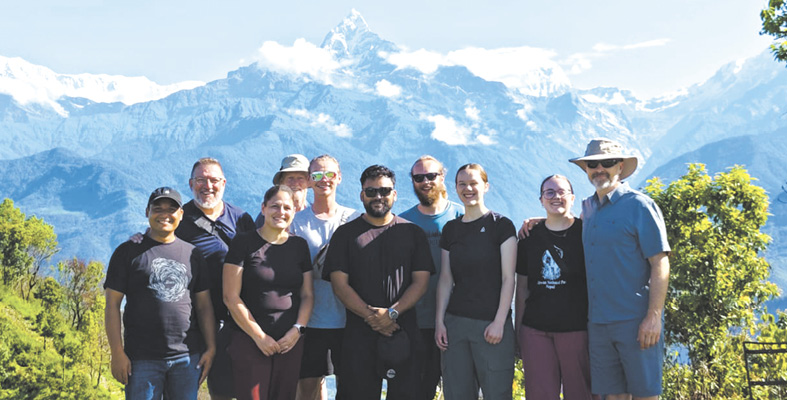
Our team of eight mission helpers arrived in Kathmandu, Nepal, on June 24 after a brief layover in Istanbul, Turkey. The “child evangelism” consisted of traveling to remote villages and presenting a four-part lesson on Jesus: “Jesus Is True God,” “Jesus Is True Man,” “Jesus Is Our Savior,” and “Jesus Is for Everyone.” Accompanied by the brothers and splitting into two groups of four, we were able to present these lessons to 1,366 children in twelve different villages.
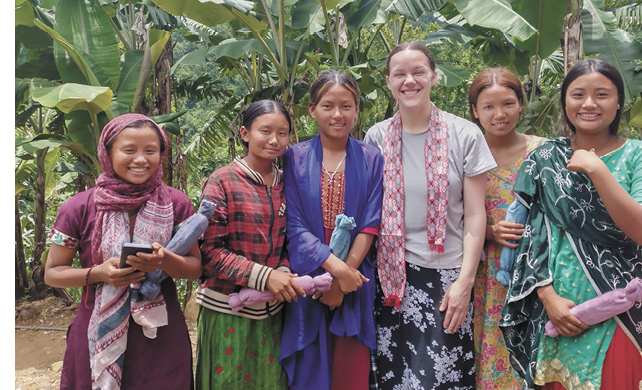
The topography of Nepal, combined with the very poor condition of the roads, made travel a challenge and therefore limited the number of villages we could visit as compared to Mission Helper trips to Africa or India. It was this remoteness, however, that made the message we carried that much more valuable. The children, both Christian and Hindu, were fascinated with their visitors, and that novelty helped us hold their attention. Travel conditions often delayed our arrival, but they would patiently wait, sometimes for hours, then give us their attention for another hour or so. The faces of these children were a sure cure for any fatigue we may have been feeling.
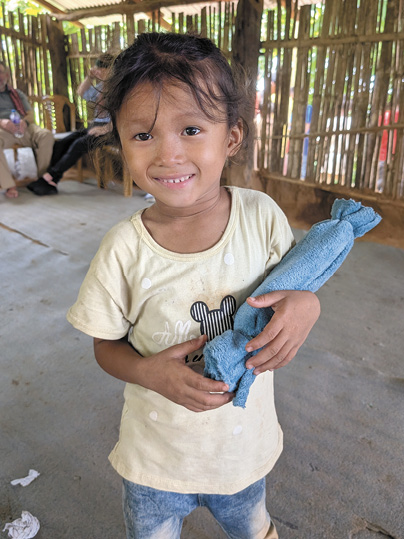
A typical lesson consisted of our Nepali hosts welcoming us, singing songs, and offering prayers for our success and safety. The Mission Helpers would then present their lessons to groups that ranged between 40 to 180 children and adults. One of the more interesting traditions is the greeting shared among Nepali Christians as opposed to Nepali non-Christians. The Nepali non-Christians use the extremely common greeting of namaste, meaning “I bow to you,” which is used for hello and goodbye. Nepali Christians, however, greet each other with the word Jaimashi, which means “Jesus is victorious.” It’s a greeting which is meant to foster fellowship and offer encouragement, especially in the midst of persecution. We used both on our travels, depending on the situation.
Our hosts also provided “leisure and sightseeing days,” which included a guided tour through some of Nepal’s historic sites, a day of breathtaking views of the Himalayan Mountains, and the chance to see Nepali wildlife—including rhinos, crocodiles, and elephants.
The trip was rewarding, humbling, thrilling, and just plain unforgettable. To play a small role in spreading the Gospel message half a world away to villages tucked into the hills of Nepal is an undeserved blessing that I hope many more will take advantage of.
For more information about the Mission Helper Program and its annual trips please visit https://mht.lutheranmissions.org/
For more information about Project Kinship, which offers opportunities to financially support these efforts in Nepal as well as other overseas locations, please contact Dan Roehl at 507-381-2042 or danroehl@hotmail.com.

is a public-school teacher and a member of the CLC’s Project Kinship. His home is in Eau Claire, Wisconsin.