
In high school I had a teacher who was fond of quoting a Latin proverb that translates, “Repetition is the mother of learning.” We recognize the wisdom in those words, for it is by repeated hearing or reading of subject matter that it becomes fixed in the mind.
We see the principle of learning by repetition at work in the Bible. There the writers inspired by the Holy Spirit often repeat words and phrases to impress them on the minds and hearts of the hearers. One place where we especially see this is the book of Ezekiel. No one can read it without being struck by the repetition of the phrase, “Then they shall know that I am the Lord.” Seventy-three times God employs variations of this phrase in His message to the prophet.
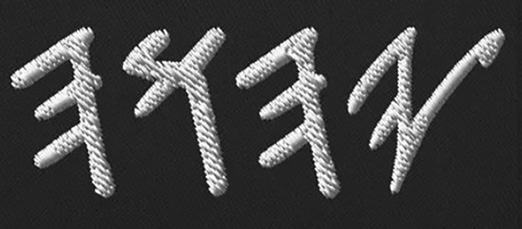
The four letters of the divine name in ancient Hebrew script
The truth that God teaches by repetition here is that He is “the Lord.” That word, when the last three letters appear in small capital letters in English versions of the Old Testament, is the divine name of four Hebrew letters first revealed to Moses in Exodus 3:14. Transliterated from the Hebrew into English it is sometimes rendered Jehovah or Yahweh. With this name God reveals His nature as the one true and living God; eternal, self-existing, the Creator of all things, the source of all life.
The descendants of Abraham were privileged to know the true God. He had made Himself known to them as the holy God to Whom they were accountable, but also as the Redeemer Who had promised them forgiveness and salvation through the Christ, Who was to come from among them. But as a nation they had despised the revelation of this name and gone after the idols of their heathen neighbors. Instead of godly behavior, they exhibited selfishness, greed, and lust; without repentance.
In response to this, the Lord announced through His prophet Ezekiel that He would bring devastating judgments on them, permitting them to be conquered by Babylon. Jerusalem and the temple would be destroyed, the people killed or taken into captivity. When these prophesies came to pass, the people would know that the God Who had spoken to them was truly the Lord. “And they shall know that I am the Lord; I have not said in vain that I would bring this calamity upon them.” (Ezekiel 6:10)
The prophet was sent to announce God’s judgment also on nations such as Ammon, Moab, Philistia, Tyre, Sidon, and Egypt for their wickedness. Of them too God says, “Then they shall know that I am the Lord.”
But it isn’t only in connection with judgment that God speaks this phrase through Ezekiel. He also promised His people deliverance after He had chastised them. He would bring them back to Judah and Jerusalem. And He promises, “They shall know that I am the Lord, when I have broken the bands of their yoke and delivered them from the hand of those who enslaved them.” (Ezekiel 34:27)
In each case where this phrase is repeated, we see that it was by the fulfillment of His Word that God showed His people and the nations that He is the Lord, the one eternal God Whose Word always comes to pass and is never spoken in vain.
It is by that same fulfilled Word that we know the God of the Scriptures to be the true God, for there we have the documentation of His promises and their fulfillment. By that sacred record we know that God will surely carry out His judgments on impenitent sinners. Above all, we know God as the God of grace and love in the promises of a Savior from sin. These promises were fulfilled in the birth, life, death, and resurrection of His Son Jesus Christ. And knowing this, we are certain of our salvation.

is a retired pastor. He lives in Watertown, South Dakota.