

The actor strides across the stage to accept an award. He is the star of an incredibly successful movie. As the applause fades, the actor begins by offering thanks to a long list of those who have contributed to this triumphant moment.
Similarly, Martin Luther is the star of the Reformation, but there were many others whom God used to mold and prepare Luther, assist him, and serve with him. Johann von Staupitz is one such individual.
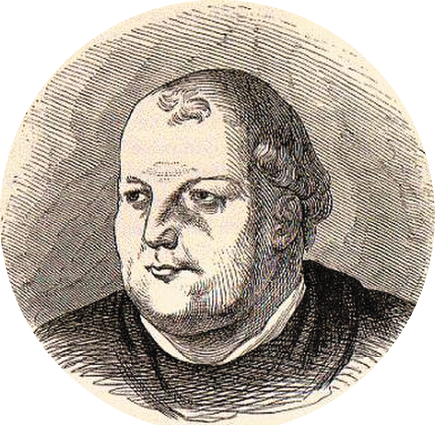
Johann von Staupitz – 1469-1524
Staupitz was Vicar-general among the Augustinian monks in Germany. From the beginning, Staupitz recognized gifts in Martin Luther, and he began to quietly prepare him for greater work in the church. When Martin was struggling mightily with his sin, Staupitz listened to him with a shepherd’s heart. He pointed Martin to Christ. Luther later said, “If God through Doctor Staupitz had not helped me out of [my thoughts and temptations], I would have drowned in them and gone to hell.”
As opposition to Luther intensified, Staupitz was pressured to bring the wayward monk back to the theology of Rome. When this pressure became an order, he realized that he could not fulfill the responsibility—he loved Luther as a son and had sympathy for Luther’s cause—so he resigned from his position.
Staupitz was a mentor, leader, and trusted friend to Martin Luther, and the relationship flowed both ways. “As iron sharpens iron, so a man sharpens the countenance of his friend.” (Proverbs 27:17)
God provided Martin Luther “for such a time as this” (Esther 4:14) to restore the true teaching of His Word. But it was never Martin Luther’s work; it was always God’s work through Luther. To accomplish His work, the Lord used Staupitz to prepare Luther. A historian wrote, “[Staupitz] stimulated and encouraged his great disciple until the latter had developed into a fitness for the mighty work to which he was called of God.”
God provided an enormous cast of others to make the work of Luther possible: Reformation forerunners who lost their lives proclaiming truth, those who influenced Luther, the many who worked alongside him, and those who followed him. This highlights what God teaches us about His Church, namely, He is the active one, but He accomplishes His work through the varied gifts of all His people. “For as we have many members in one body, but all the members do not have the same function, so we, being many, are one body in Christ . . . Having then gifts differing according to the grace that is given to us, let us use them.” (Romans 12:4-6)
When we see God’s hand working through many, it encourages us to engage others and to be engaged. We live in a world that is becoming more and more withdrawn. The kind of personal counsel and encouragement that Luther and Staupitz enjoyed is being turned over to internet search engines instead of the Christian friend sitting next to me. Behind-the-scenes support and mutual strengthening is fading in the supposed glamor of an independence that pridefully does not want to become vulnerable by sharing fears, uncertainties, and failures—or is simply too scared to do so. We live in a world in which the temptation is to “go it alone,” or just ignore what is happening, instead of engaging pastoral care. Seeing the relationship that God fostered between Staupitz and Luther is a reminder that we are each equipped with the Gospel to forgive sins, to share the Word with one another, and by so doing “exhort one another, and so much the more as you see the Day approaching.” (Hebrews 10:25)
Martin Luther is the face of the Reformation, but we are reminded also to give thanks to God for very many others. Seeing how God used them gives us ever more reason to praise Him and to use our own gifts for the glory of His name as we labor in the vineyard together.

is pastor of Gethsemane Lutheran Church in Spokane Valley, Washington.